Most problems in a herbal extraction line start before the machine is built. The solvent, the form of the herb and the extract you want at the end decide almost everything. Get those three right and the plant design follows. Get them wrong and extra capacity will not fix it.
This guide is for nutraceutical, ayurvedic and herbal product makers who want to buy herbal extraction plant in India. It explains how a plant works, which factors decide its design and what a herbal extraction plant manufacturer needs from you before quoting.
Pragati Engineers has manufactured process equipment in Ambala, Haryana since 1996. You can see our range on the herbal extraction plant page.
Key takeaways
- A herbal extraction plant has an extractor, a concentrator and a condenser. Many plants also add a solvent recovery unit and a dryer.
- Your raw material, solvent, batch size and final extract form decide the design.
- SS 304 and SS 316L are the common grades for product contact parts.
- Solvent recovery cuts running cost when you use alcohol or another costly solvent.
- Send complete process data with your enquiry so the quote matches your plant.
What is a herbal extraction plant?
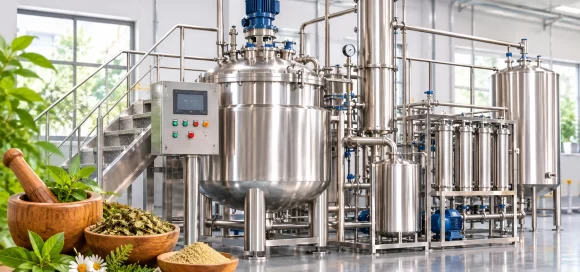
A herbal extraction plant is a set of process equipment that removes active compounds from herbs and plant material using a solvent such as water or alcohol, then concentrates the liquid into an extract. Its main units are an extractor, a concentrator, a condenser and, where needed, a dryer and a solvent recovery system.
How does a herbal extraction plant work?
The process follows six steps.
- Loading: The herb is loaded into the extractor with the chosen solvent.
- Extraction: The solvent draws out the active compounds at a set temperature and time.
- Draining and filtration: The liquid extract is separated from the spent herb.
- Concentration: The concentrator removes most of the solvent and leaves a thicker extract.
- Solvent recovery: The condenser turns solvent vapour back into liquid, which can be cleaned and reused.
- Drying (optional): A dryer turns the thick extract into a dry product.
Each step uses its own equipment, so a plant is a line of machines rather than one unit.
Who uses a herbal extraction plant in India?
Demand comes from companies that turn plant material into finished products.
- Nutraceutical companies making capsules, tablets and powders.
- Ayurvedic manufacturers that need extracts for classical and modern formulations.
- Herbal and wellness brands that want to produce their own extracts.
- Contract manufacturers running extraction for several clients.
Buy herbal extraction plant in India: 8 factors to check first
1. Raw material and extraction method
Leaves, roots, bark and seeds behave differently in an extractor. They differ in bulk density, how they release compounds and how easily the liquid drains away. The extraction method you use decides the extractor design, so settle it before you ask for a quote.
2. Solvent
Water, ethanol and water-alcohol mixes each call for different seals, gaskets and safety measures. Alcohol vapour is flammable, so plants that use it need flameproof electricals, good ventilation and proper earthing. Tell your supplier the solvent and the solvent-to-herb ratio at the start.
3. Batch size and extractor volume
Size the extractor from your batch, but remember that dry herb absorbs solvent and swells. The working volume is therefore larger than the herb weight alone. A supplier who asks about both numbers is sizing the plant correctly.
4. Concentrator type
The concentrator removes solvent from the extract. Vacuum concentration lowers the boiling point, which protects heat-sensitive compounds. Check the capacity, the vacuum option and how easily the unit cleans.
5. Material of construction
Parts that touch the product are usually stainless steel.
| Grade | Strength | Typical use |
|---|---|---|
| SS 304 | Good general corrosion resistance, lower cost | Water-based extraction and non-aggressive herbs |
| SS 316L | Better resistance to chlorides and acidic extracts | Acidic extracts and plants that are cleaned often |
Confirm the grade for every contact part when you order.
6. Heating and utilities
Common heating sources are steam, hot water and thermic fluid. Choose the one your plant already has, and confirm your power supply and cooling water. The condenser is a heat exchanger, so its duty and material matter. Our guide to heat exchanger suppliers in India explains the main types, and you can see our condenser heat exchanger page.
7. Cleaning and GMP readiness
Plants that switch between herbs need to clean well. Look for smooth internal surfaces, full drainability and easy access. Ayurvedic manufacturers in India work under the GMP requirements in Schedule T of the Drugs and Cosmetics Rules, so ask what documents the supplier provides with the plant.
8. Solvent recovery and drying
If you need a dry extract, plan the dryer early. A vacuum tray dryer dries at lower temperature, which suits heat-sensitive extracts. To compare dryer types, read our guide to pharmaceutical drying equipment in India.
Solvent is a running cost. A solvent recovery plant collects the solvent leaving the concentrator and cleans it for reuse. Our guide to solvent recovery plant suppliers in India explains how that step works.
What affects the cost of a herbal extraction plant?
Cost depends on your configuration, so no single figure fits every buyer. These factors have the biggest effect.
- The size and number of extractors.
- The concentrator type and capacity.
- The stainless steel grade on contact parts.
- The level of automation and instruments.
- Whether you add solvent recovery and a dryer.
- Safety features for flammable solvents.
A quote based on your own data is the only fair way to compare suppliers.
What to send with your enquiry
- The herb or raw material and its form, such as dry leaf, root or powder
- The solvent and its ratio to the herb
- Batch size in kilograms of herb per batch
- The extract you want: liquid, paste or dry powder
- Material preference: SS 304 or SS 316L
- Heating source available in your plant
- Whether you need solvent recovery and a dryer
- The level of automation you expect
- Space limits and power supply
- Documents your quality team needs
Questions to ask before you order
- Can you size the plant from my batch size and solvent?
- Which extractor design do you suggest for my herb, and why?
- How do I clean the plant between batches?
- Which spares do you keep in stock?
- What tests do you run before dispatch?
- What is the delivery time for my configuration?
How to choose a herbal extraction plant manufacturer in India
A good herbal extraction plant manufacturer asks about your herb and solvent before quoting a price. Look for these points.
- Experience with process plants, backed by references. See our clients page.
- Willingness to build to your batch size, material and layout.
- Ability to supply the wider line, such as reactors, filters, dryers and solvent recovery.
- Spares and service support after dispatch.
- Export experience if the plant is going overseas.
Pragati Engineers is ISO 9001:2015 certified and has manufactured and exported equipment from Ambala since 1996, including to South-East Asia and the Gulf. Read about our herbal extraction plant manufacturer in India range, browse the herbal extraction category and learn more about us. You can also review our certificates and infrastructure before you enquire. For the wider picture of how plants fit together, see our overview of pharmaceutical process equipment in India.
Get a quote for your herbal extraction plant
Share your raw material, solvent, batch size and the extract you want. Our team will suggest a configuration and send a quotation.
- Call: +91-9896008557 or +91-7496970799
- Email: pragati@pragatiengineers.com
- Address: No. 87, Industrial Estate, Ambala Cantt, Ambala 133 006, Haryana, India
- Request a quote
FAQs about buying a herbal extraction plant
What does a herbal extraction plant do?
It pulls active compounds out of herbs using a solvent such as water or alcohol. The extractor does the pulling, and the concentrator removes the solvent to leave a concentrated extract.
How do I buy a herbal extraction plant in India?
Start with your raw material, solvent, batch size and the extract form you want. Share these with a herbal extraction plant manufacturer so the team can suggest a configuration and send a quotation.
What is the difference between an extractor and a concentrator?
The extractor holds the herb and solvent while the active compounds dissolve. The concentrator then removes the solvent from the liquid extract to make it thicker.
Which material is best for a herbal extraction plant?
SS 304 and SS 316L are both common. SS 316L resists chlorides and acidic extracts better, while SS 304 often suits water-based extraction with non-aggressive herbs.
Do I need solvent recovery?
If you use alcohol or another costly solvent, recovery saves solvent and reduces waste. Many buyers add a solvent recovery plant so the solvent can be reused.
How much does a herbal extraction plant cost in India?
Cost depends on extractor size, concentrator type, material grade, automation and add-ons such as solvent recovery and a dryer. A supplier can give an accurate quotation once you share your batch size and solvent.
Can the plant be customised?
Capacity, material and layout can be matched to your process. Share your batch size and solvent so the team can suggest a suitable configuration.
Who uses herbal extraction plants?
Nutraceutical, ayurvedic and herbal product makers use them to turn raw herbs into extracts for capsules, tablets, syrups and other products.
What details should I send with my enquiry?
Send the herb or raw material, solvent, batch size, extract form, material preference, heating source and power supply. Add your plant space limits as well.
Does Pragati Engineers export its equipment?
Yes. Pragati Engineers manufactures and exports process equipment from Ambala, Haryana. Share your destination country with your enquiry so the team can plan packing and delivery.